Community guide
Living in Palm Jumeirah
Palm Jumeirah pairs prime beachfront resort living with world-class dining, but buyers face steep price premiums and frustrating access bottlenecks.
Overall score
Private beaches, resort dining and villa or apartment beachfront living on Dubai's most recognisable address.
What it feels like day to day
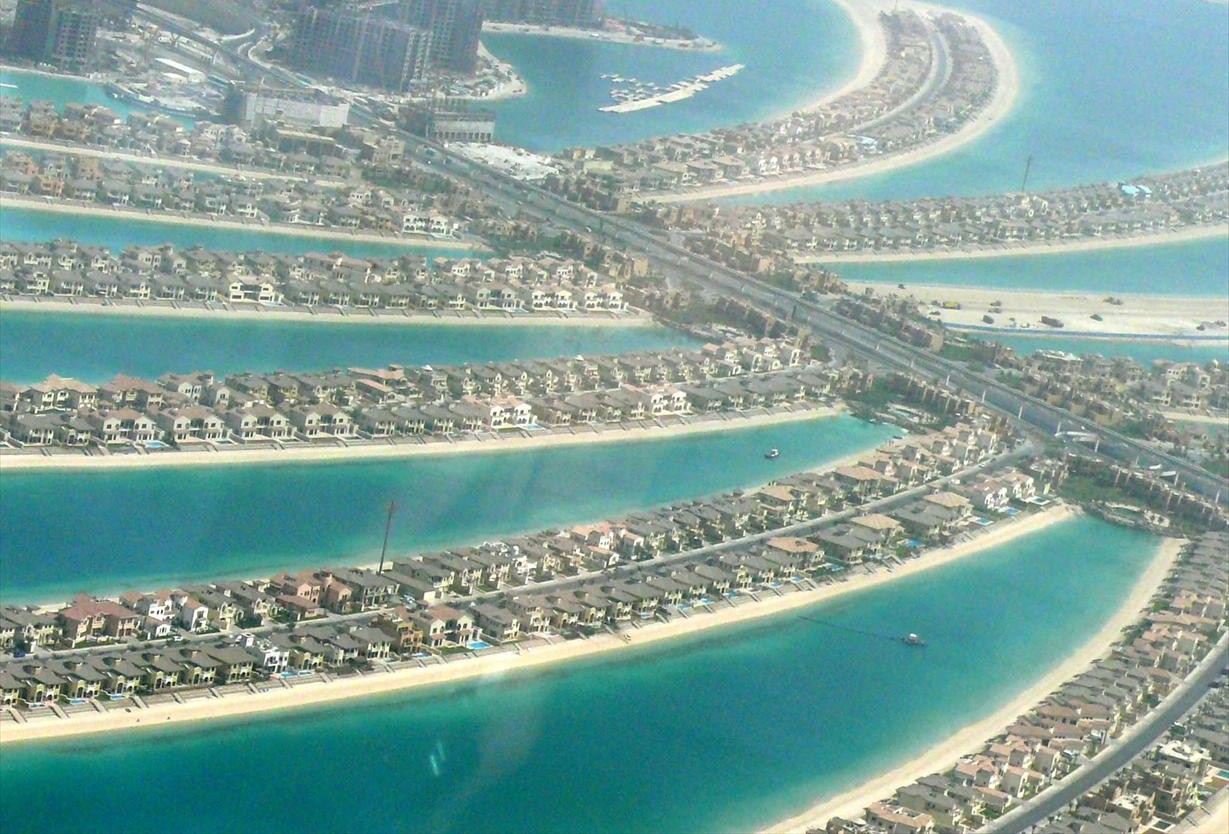
Daily life on Palm Jumeirah delivers the distinct resort-like atmosphere promised by its global reputation. Most homes benefit from uninterrupted sea views and direct private beach access, establishing an environment defined by coastal leisure. The overall community quality earns an 8.6/10, underpinned by a high maturity rating of 8.8/10 that reflects a fully developed neighbourhood rather than an emerging construction site. Residents spend evenings along the waterfront or visiting high-end hospitality venues integrated directly into the development.
However, the reality of living on an artificial archipelago brings specific structural compromises. Because it remains an internationally recognised landmark, portions of the community are consistently tourist-heavy, detracting from residential privacy. The primary access spine creates notable vehicle pressure, reminding residents that daily convenience relies heavily on their exact position across the trunk, fronds, or crescent. It feels exclusive and self-contained, yet unmistakably exposed to the steady rhythms of Dubai's luxury tourism sector.
Where the scores are strongest
The Palm achieves its highest marks in dining and retail alongside amenities, both recording an exceptional 9.2/10. Daily convenience and high-end leisure are supported by destinations like Nakheel Mall and the pedestrian-friendly Boardwalk. Furthermore, access to world-class hotel dining means residents rarely need to leave the island for top-tier culinary options. Leisure facilities, wellness offerings, and seaside infrastructure represent the very upper tier of what the city provides.
Property standards remain consistently high, reflected in a quality rating of 8.4/10 across various building ages. Buyers benefit from a proven history of strong capital appreciation, reinforcing the development's status as a trophy acquisition. The combination of sea views from most properties, reliable building standards, and immediate shoreline access underpins an overall rating of 8.4/10, making it compelling for high-net-worth purchasers focused purely on prestige and private coastal recreation.
Where it falls short
The island’s most noticeable deficiency lies in open landscape, where greenery scores just 6.4/10. While private gardens and beachfront plots exist, public parks and shaded green areas are sparse across the dense marine layout. Similarly, a family-friendly score of 7.6/10 reflects that the environment prioritises hospitality and seaside leisure over everyday suburban infrastructure, leaving families with fewer broad communal spaces compared to mainland villa suburbs.
Connectivity registers at 7.4/10, constrained directly by the island's single entry and exit corridor. Traffic bottlenecks on the central trunk are a persistent irritation during peak hours. Additionally, walkability earns 7.4/10; while the Boardwalk and mall precincts offer pleasant pedestrian exercise, the vast scale and isolated road layouts make a car indispensable for standard errands across different sectors of the development.
Homes, rents and value
Housing stock covers an ultra-premium spectrum, ranging from standard apartments to sprawling signature villas, penthouses, and custom mansions. Asking prices begin at approximately AED 2.6m for a one-bedroom apartment, escalating to beyond AED 100m for prominent signature villas. The rental market exhibits a similarly broad range, starting around AED 72k annually for entry-level apartments and reaching AED 4m per year for top-tier beachfront homes.
The central compromise is financial efficiency, as evidenced by a modest value for money score of 6.8/10. Buyers and tenants pay a considerable premium purely for the prestige of the address and immediate beach adjacency. Interior square footage is noticeably more expensive here than comparable spaces in established mainland communities, making Palm Jumeirah suitable only for those who accept high property costs as a fair trade for prime waterfront positioning.
Getting around and schools
Transport relies entirely on a single trunk road connecting back to the mainland, meaning journey times vary significantly depending on congestion. Under off-peak conditions, driving to Dubai Marina takes roughly 16 minutes, while central commercial hubs like DIFC and Business Bay require around 30 minutes. Reaching Downtown takes approximately 33 minutes, Dubai South 37 minutes, and an onward journey to Abu Dhabi sits at about 67 minutes.
Educational institutions are situated off the island, necessitating a regular commute for families with school-age children. Established options located within reasonable driving distance include Dubai College, Regent International School, and Emirates International School. Factoring school drop-offs into morning traffic along the trunk remains an essential logistical consideration for parents contemplating relocation to this beachfront enclave.
Our verdict
Palm Jumeirah represents an exceptional coastal lifestyle with world-class amenities and trophy status, offset by severe trunk road congestion and high price premiums. It remains best suited to affluent buyers who prioritise private beach living and luxury dining over everyday space efficiency.
Who it suits
- Buyers seeking direct private beach access and open sea views.
- Investors and owner-occupiers targeting a globally recognised trophy address.
- Residents who place premium value on world-class hotel dining and resort facilities.
Who should look elsewhere
- Budget-conscious buyers seeking optimal interior square footage for their money.
- Commuters who cannot tolerate single-access road bottlenecks during rush hour.
- Families desiring lush green suburban parks and walkable neighbourhood schools.
Questions people ask
How difficult is everyday traffic when leaving the island?
Because there is only one road in and out, the central trunk regularly suffers from traffic bottlenecks during peak commuting hours. Off-peak journeys are straightforward, but residents must plan carefully around morning and evening rush-hour congestion.
Are there good schooling options located directly on Palm Jumeirah?
There are no major primary or secondary campuses situated directly on the island itself. Families must travel to mainland options, with Dubai College, Regent International School, and Emirates International School serving as the closest established choices.
Do all homes on the island include private beach access?
Private beachfront access is standard for frond villas and select shoreline apartment complexes, but it is not universal across every property. Buyers seeking guaranteed private sands should confirm the specific shoreline rights attached to their chosen development or building.
Is the Palm reasonably walkable for routine shopping and errands?
Walkability is rated at 7.4/10, supported by dedicated routes like the Boardwalk and indoor retail at Nakheel Mall. However, due to the massive physical scale and isolated road networks of the fronds and crescent, owning a vehicle remains essential for daily errands.